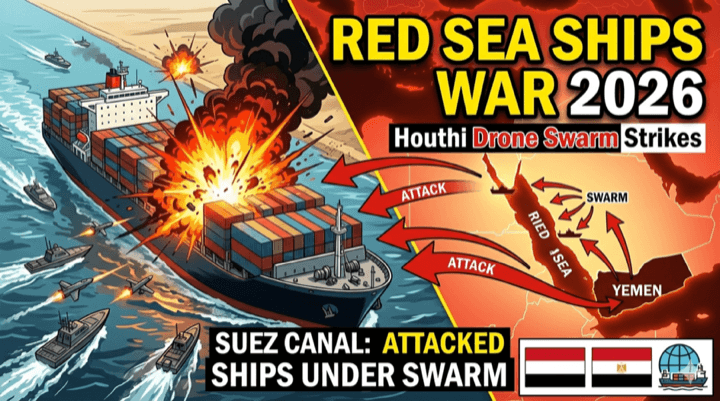
Red Sea Crisis 2026 — Houthi Attacks, Suez Canal Collapse & Global Shipping Chaos
BREAKING — Updated March 31, 2026
The Red Sea — one of the most important shipping corridors on earth — is now a war zone. Houthi rebels from Yemen have been attacking commercial ships, oil tankers, and US warships since October 2023. But since the Iran-US war erupted on February 28, 2026, the attacks have escalated dramatically. Suez Canal traffic has collapsed, global shipping costs have tripled, and the economic shockwaves are hitting supermarkets, fuel pumps, and supply chains worldwide. This is the full picture of what is happening and what it means for you.
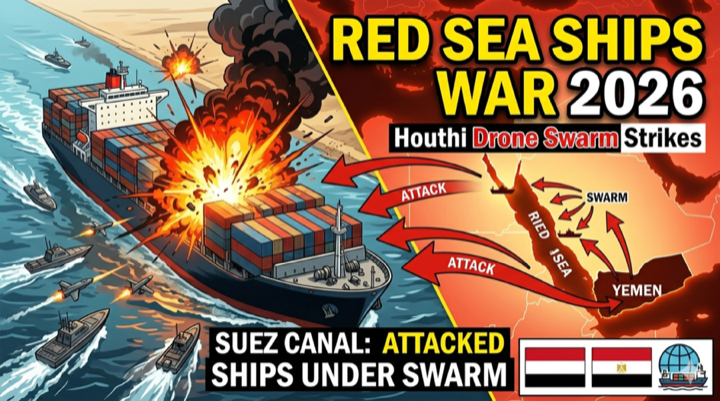
The Red Sea corridor — responsible for 12% of global trade — has become a war zone in 2026
Why Is the Red Sea So Important?
The Red Sea connects the Mediterranean Sea to the Indian Ocean through the Suez Canal — a route used by roughly 12% of all global trade and about 30% of global container shipping. Every day, hundreds of ships pass through carrying oil, gas, consumer goods, raw materials, and food. It is the fastest route between Europe and Asia. When it shuts down, the whole world feels it. To understand why the Houthis are attacking this route, read our full Houthis entering the war explainer.
What Have the Houthis Actually Done?
Since October 2023, the Houthis have conducted the most sustained maritime assault by a non-state actor in modern history. Initially targeting ships linked to Israel, they expanded their attacks to any vessel they deemed connected to the US or UK. Since the Iran-US war began in February 2026, the attacks have become near-daily. Reuters has tracked every confirmed Houthi maritime attack since the crisis began.
| Weapon Used | Number of Incidents | Notable Targets | Effect |
|---|---|---|---|
| Anti-ship ballistic missiles | 45+ | US warships, tankers | Several near misses, 2 ships sunk |
| Cruise missiles | 60+ | Commercial vessels | Multiple ships damaged and abandoned |
| Suicide drones (Shahed) | 100+ | Bulk carriers, container ships | Fires, crew casualties, 1 ship sunk |
| Naval mines | 12+ | Shipping lanes | 2 ships hit, lane diversions forced |
| Speedboat raids | 8 | Cargo ships | Galaxy Leader seized Nov 2023, crew held |
How Has Global Shipping Responded?
The shipping industry's response has been massive and swift. Major carriers began diverting vessels around the Cape of Good Hope in December 2023. By March 2026, the diversion has become the industry standard rather than the exception. The financial consequences are enormous — and ultimately paid by consumers everywhere.
What Is It Doing to Prices?
This is where the Red Sea crisis stops being an abstract geopolitical event and becomes your weekly shopping bill. The cost of shipping a standard 40-foot container from Asia to Europe has risen from around $1,500 in early 2023 to over $5,500 in March 2026 — with some spot rates exceeding $7,000. Those costs travel directly through supply chains to retail prices.
Can the US Military Stop the Attacks?
The US has been striking Houthi missile sites, radar installations, and launch infrastructure in Yemen since January 2024 — over 14 months of continuous bombardment. The result: the attacks have not stopped. They have intensified. BBC News has reported extensively on why US strikes have failed to degrade Houthi capabilities.
Which Countries Are Hit Hardest?
| Region / Country | Key Dependency on Red Sea | Impact Level |
|---|---|---|
| Europe (especially Germany, UK, Italy) | Primary route for Asia imports | Severe — 10-14 day delays, price rises |
| Egypt | Suez Canal revenues = 2% of GDP | Critical — losing $1B+ per month |
| East Africa (Ethiopia, Kenya, Somalia) | Most imports arrive via Red Sea | Severe — food and fuel shortages |
| India | Exports to Europe routed through Red Sea | High — shipping costs doubled for exporters |
| China | Manufactures most goods shipped through Red Sea to Europe | High — exporters absorbing freight costs |
| USA | Less dependent — Pacific and Atlantic routes available | Moderate — mainly energy price impact |
The biggest diplomatic casualty is Egypt, which earns roughly $9–10 billion per year from Suez Canal tolls. With traffic down 60%, the Egyptian economy — already struggling — faces a severe fiscal crisis. This is adding regional political pressure to end the war quickly. For the broader picture of how many countries are affected by the Iran war, see our full countries involved breakdown.
Further Reading — Trusted Sources
Also in This Series
Why are Houthis attacking ships in the Red Sea?+
Has the Suez Canal been completely closed?+
How long will the Red Sea crisis last?+
Is it safe for ships to pass through the Red Sea in 2026?+
How does the Red Sea crisis affect me personally?+
Will the Red Sea crisis cause a global recession?+
Keep Reading

Try Our Free Tools
Want more guides like this?
Join 50K+ readers getting weekly tips on AI, automation & making money online.
Subscribe Free